

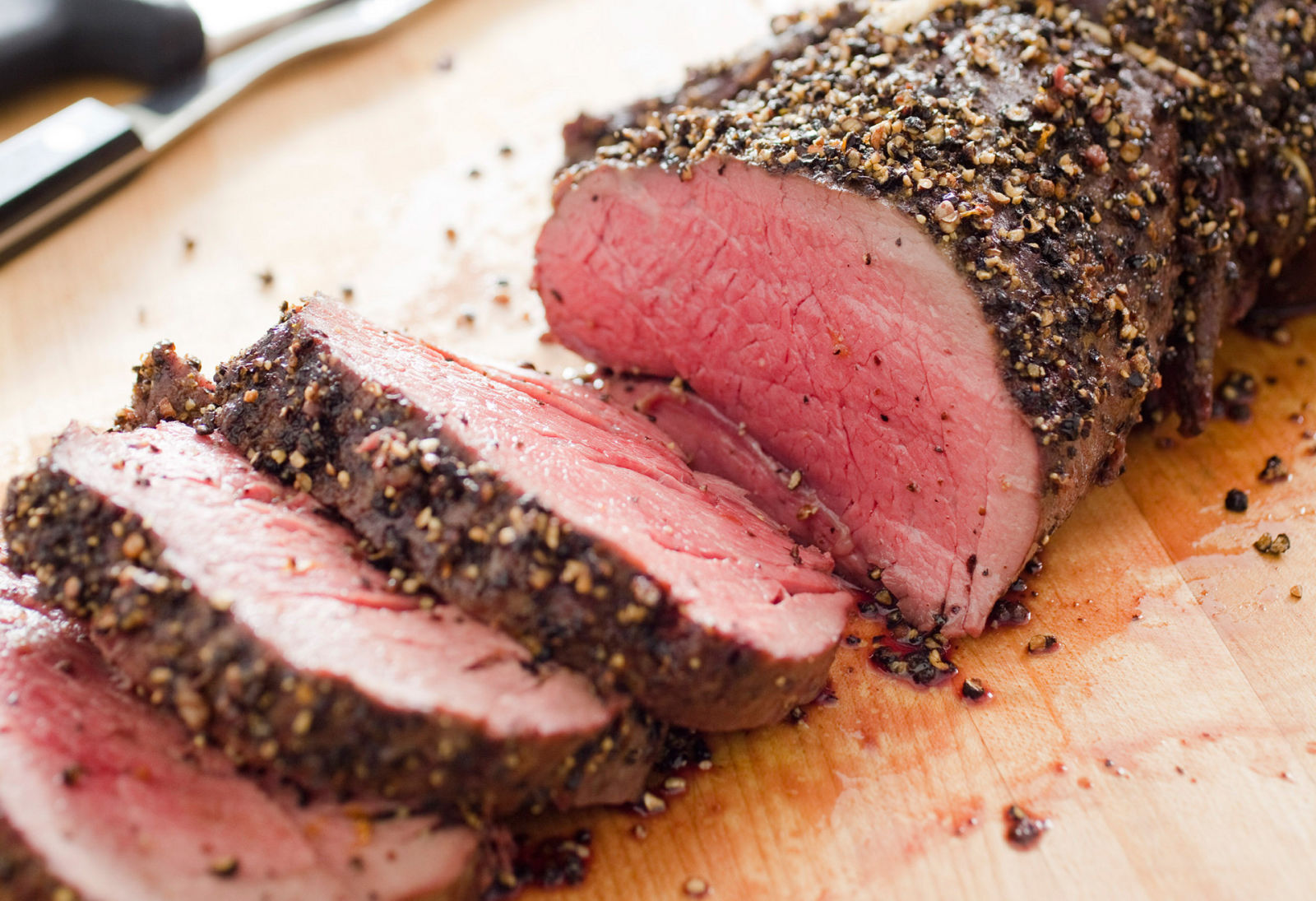
1. Use High Heat to Develop Flavor
To ensure that meat browns properly, first make sure the meat is dry before it goes into the pan; pat it thoroughly with paper towels. This is especially important with previously frozen meat, which often releases a great deal of water. Second, make sure the pan is hot by preheating it over high heat until the fat added to the pan is shimmering or almost smoking. Finally, make sure not to overcrowd the pan; there should be at least 1/4 inch of space between the pieces of meat. If there isn't, the meat is likely to steam instead of brown. If need be, cook the meat in two or three batches.
For large cuts of meat or poultry, we often advocate a low-and-slow cooking method. We find that this approach allows the center to come up to the desired internal temperature with less risk of overcooking the outer layers. An experiment we recently conducted proves that even cooking isn't the only benefit of slow-roasting: It also helps minimize the loss of flavorful juices (and fat). Cooking at the wrong temperature is a common mistake.
Tough cuts, which generally come from the heavily exercised parts of the animal, respond best to slow-cooking methods, such as pot roasting, stewing, or barbecuing. The goal of slow cooking is to melt collagen in the connective tissue, thereby transforming a tough piece of meat into a tender one. These cuts are always served well done.
Tender cuts with little connective tissue come from parts of the animal that receive little exercise (like the loin, the area along the back of the cow or pig). These cuts respond best to quicker, dry-heat cooking methods, such as grilling or roasting. These cuts are cooked to a specific doneness.
Since the temperature of meat will continue to rise as it rests, an effect called carryover cooking, meat should be removed from the oven, grill, or pan when it's 5 to 10 degrees below the desired serving temperature. Carryover cooking doesn't apply to poultry and fish (they don't retain heat as well as the dense muscle structure in meat).
The purpose of resting meat is to allow the juices, which are driven to the center during cooking, to redistribute themselves throughout the meat. As a result, meat that has rested will shed much less juice than meat sliced straight after cooking. A thin steak or chop should rest for 5 to 10 minutes, a thicker roast for 15 to 20 minutes. And when cooking a large roast like a turkey, the meat should rest for about 40 minutes before it is carved.
Sign up to receive email updates on new recipes.
Discover and share delicious recipes on WellCooked — a community where food lovers connect, cook, and inspire each other with easy, creative, and well-tested dishes from around the world.
Add Your Comment