

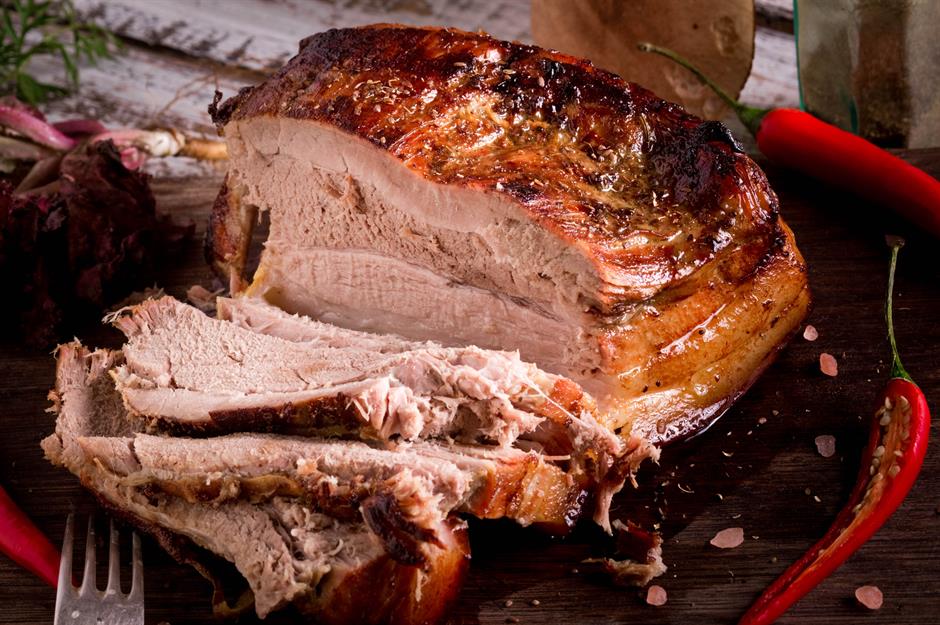
Low-grade meat is better for the weekly food budget but tends to come at the cost of taste, nutrition, and welfare. One option is to eat meat less often and buy quality when you do – this way both consumers and animals benefit. Ask a butcher for smooth, pink meat with white fat and buy locally and organic where possible.
The most commonly used cuts of a pig include pork belly, chops, leg, loin, shoulder, ribs, tenderloin, and gammon joint. Every cut offers varying levels of fat and flavor and needs to be cooked accordingly. It's thought that the nearer to the head the sweeter and more succulent the meat.
Like all raw meat, pork should be kept sealed in the fridge so leaks can’t contaminate other foods. There’s no need to wash raw pork before cooking as this can spread food-borne diseases – just pat dry instead, and allow it to come up to room temperature before cooking. Don’t cook frozen pork without defrosting it first.
Fattier cuts of pork include belly, neck, and shoulder (choose shoulder for pulled pork). These cuts are suited to slow-cooking, roasting or braising. Meaty spare ribs come from the shoulder end of the belly and are the ultimate barbecue food. You can eat the meat and leave the fat if you prefer. Pork mince also contains a fair amount of fat unless you buy lean. Use mince to make burgers, meatballs, and bolognese. Hocks are also quite fatty – simmer for soups and terrines.
For lean pork opt for meat from the loin – this is often cut into medallions and chops which are best pan-fried, grilled, baked or barbecued. A whole tenderloin is sometimes known as the fillet. Pricey but worth it, tenderloin is usually seared then roasted – marinate, wrap in bacon or pancetta, or baste to prevent it drying out. A leg of pork is relatively low in fat and will be juicier if slow-cooked on the bone. Pan-fry or grill boneless escalopes, and boil trotters for stock.
Sign up to receive email updates on new recipes.
Discover and share delicious recipes on WellCooked — a community where food lovers connect, cook, and inspire each other with easy, creative, and well-tested dishes from around the world.
Add Your Comment